No items found.
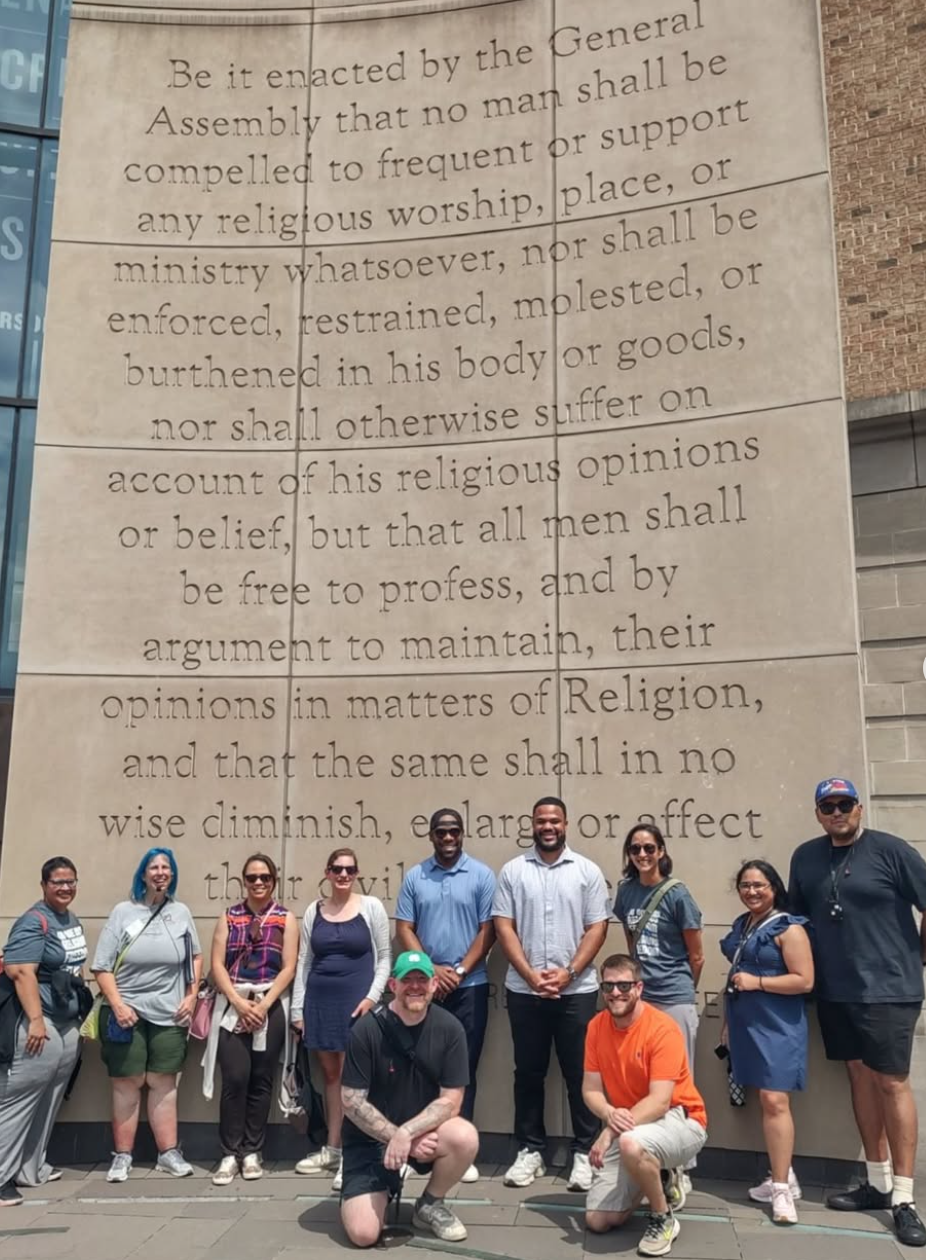
To study religious freedom in America is an attempt to navigate a complex, shifting landscape where past and present continuously collide. Participating in the 2026 BJC Fellows program provided a critical insight for this inquiry, moving the study of faith, law, and liberty out of abstract isolation and into the lived, contested spaces of American history. Through immersive field studies, rigorous dialogue, and deep relational engagement, the fellowship fundamentally challenged and expanded my understanding of how religious freedom functions, and at times fails to function, at the intersections of history, race, religion, politics, and law.
Our intellectual and experiential journey grounded itself in the physical and historical topography of Virginia, demanding a critical reckoning with the foundational narratives of church and state. Visiting The Valentine Museum offered a jarring, necessary confrontation with how public memory and imagination are constructed. By examining the material culture of the past, we were forced to interrogate the enduring legacy of the “Lost Cause” myth and how civic religion has historically been weaponized to sanctify white supremacy.
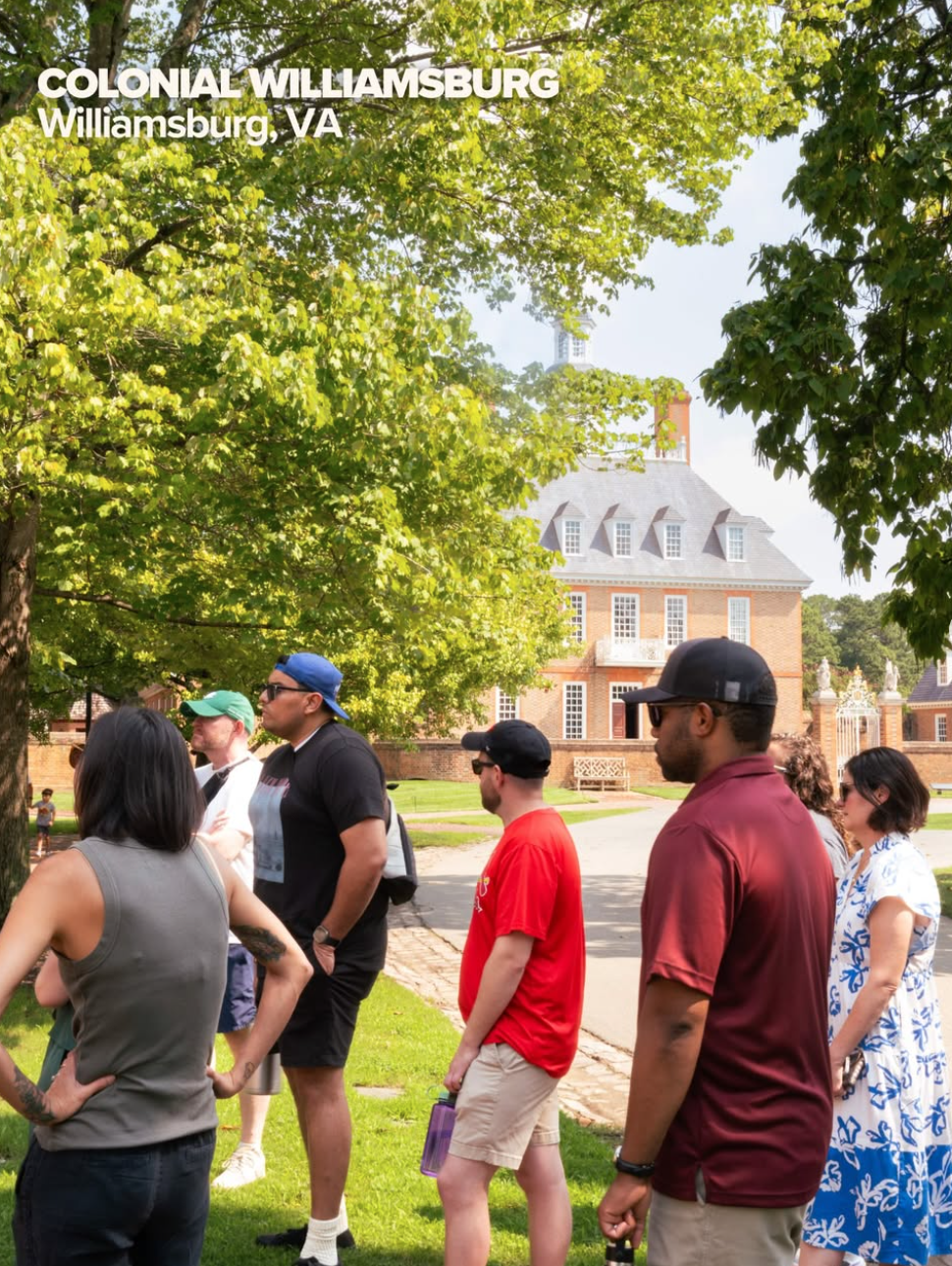
This critical historical lens deepened during our tours of Colonial Williamsburg alongside Dr. Corey D. B. Walker, Dean of the Wake Forest University School of Divinity, and Dr. Nathan Taylor, Executive Director of the Virginia Baptist Historical Society. Walking those historic grounds, we looked beyond the well-preserved colonial structures to uncover the complicated realities of religious pluralism, establishment, and marginalization. Dr. Walker and Dr. Taylor masterfully guided us through a re-examination of the geography of freedom, directing our attention to sites like the historic First Baptist Church of Williamsburg. Standing in these spaces illuminated a profound truth: the American experiment with religious liberty has always contained dissenters, often-erased resilience of enslaved and marginalized peoples who claimed their humanity and faith against the grain of the law.
These experiences were paired with the relational depth fostered within the BJC community. Being immersed alongside the dedicated staff of BJC brought institutional mission into sharp, personal focus. Under the visionary leadership of Executive Director Amanda Tyler, whose steadfast defense of the separation of church and state remains a beacon for the field, and Dr. Sabrina Dent, Director of the Center for Faith, Justice and Reconciliation, whose work insists that true religious freedom requires the freedom for all people to be fully human, the program modeled a holistic approach to advocacy. Dr. Dent’s framing of justice and reconciliation challenged us to stretch our frameworks beyond narrow definitions and declarations toward a vision of radical inclusion and equity.
Equally transformative was the peer ecosystem. Learning alongside an extraordinary cohort of emerging faith leaders, lawyers, non-profit advocates, and students generated a dynamic interdisciplinary environment. Conversations that bridged the doctrinal insights of theologians with the pragmatic realities faced by front-line litigators and community organizers exposed the multi-faceted nature of religious liberty work. Furthermore, engaging with the broader network of past BJC Fellows revealed an active, national community translating these ideals into real-world impact of resisting Christian nationalism, protecting pluralism in communities, and litigating for justice in the public square.
Ultimately, the 2026 BJC Fellows experience exposed the intricate yet fragile architecture of religious freedom. This experience has been nothing short of life-changing. By tearing down academic silos and grounding critique in historical truth and moral urgency, the fellowship has profoundly fueled my own scholarship. It has deepened my desire to step forward as a Public Theologian, one equipped to bridge the academy, the faith community, and the public square in the ongoing work of securing authentic faith freedom, justice, and dignity for all.